
K. Sarah
In the broad world of design, the term ‘good’ design is often thrown around as if it’s an objective, universally accepted standard. Designers, critics and consumers alike use it to distinguish successful work from failed attempts.
What if the idea of ‘good’ design is just an illusion and the standards we cling to are subjective, culturally conditioned, and constantly evolving?
Aesthetics and Subjectivity
At its core, design is a visual and functional language intended to communicate an idea from medium to intended audience. But like any language, its effectiveness depends on the context and audience. A design that is praised in one culture may be dismissed in another. For example, the interior design trend of minimalism in western culture is praised for its use of sparsity but in other cultures – such as traditional Indian design – maximalism is celebrated and the use of intricate ornamentation and colour are valued instead.

Even within a single culture, personal preference plays a huge role. Some love the sleek functionality and appearance of Apple’s products, while others find them overly restrictive and lacking in customisation. If ‘good’ design were a truly universal label, why would there be such a wide range of opinions?
Functionality vs. Form
Another issue with the idea of ‘good’ design is that it assumes a single criteria of success. Functionality is often used as a benchmark – design should be intuitive, easy to use, and efficient. In 1913, modernist architect Adolf Loos published his essay ‘Ornament and Crime’ criticising designers who added unnecessary ornamentation to items he felt should be strictly functional.1 But some of the most beloved designs in history were not about function alone.
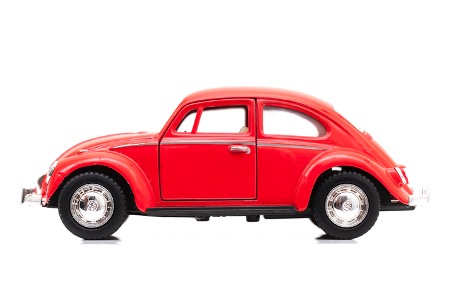
Take the Volkswagen Beetle. It wasn’t the fastest, the most fuel-efficient, or the most technically superior car. Yet its charm and personality has made it one of the most iconic designs of the 20th Century. If we were to judge it purely by the benchmark of function, it most likely would not pass the test of ‘good’ design. But it’s form has resonated with millions.
Design Trends: The Ever-Changing Definition of “Good”
If good design were an accurate and universal label, it wouldn’t change over time. Yet design trends prove otherwise. What was considered cutting-edge in the 1980s will often look outdated today. For example, the design trend of using bold, vivid colours & abstract shapes in the graphic design sphere was quite a different direction from what came before but the design evolution through the 2010’s introduced the previously mentioned minimalism trend in more than just interior design spaces (although the 1980’s design aesthetics are making a comeback so it may not look as out of place as it once may have).
Similarly, in web-design trends ‘Brutalism’ has made a huge comeback2 from the mid 50’s-70’s in some communities as they are drawn to its intentional aesthetic of raw, unfiltered visuals but there are other who find it visually offensive.
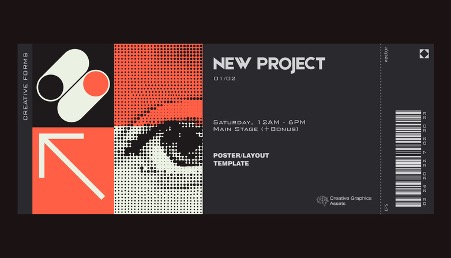
How can we assign labels of good and bad when both examples serve different purposes and audiences?
Context is Key
Who is the design ‘good’ for? For what purpose is the design ‘good’? Without context, the word ‘good’ is meaningless. A visually chaotic website might be bad design for a banking app, where clarity and simplicity is key, but perfect for an experimental art project. Additionally, a complex information-dense dashboard might be overwhelming for a casual user but essential for an expert analysing large data sets.
The legendary designer Dieter Rams created his famous ‘Ten Principles for Good Design’, but even those rules are subjective. He put emphasis on simplicity and usefulness, but what if a design’s goal is to provoke, entertain, or challenge? Many great artistic and cultural movements are dependent on complexity and contradiction.
Conclusion: There is no Absolute “Good”
The idea of ‘good’ design is not a universal truth but a matter of perspective which is shaped by culture, function and personal taste. What may work well in one context can fail in another.
Rather than aspiring to a mythical standard of ‘good’ design, designers should focus on the specific needs of their audience, the emotions they want to evoke and the context in which they operate.
Instead of asking:
“Is this Good Design?”
perhaps a better question would be:
“Is this design effective for its intended purpose?”
Sources:
- Loos, A. (1908). Ornament and Crime. [online] Available at: https://www2.gwu.edu/~art/Temporary_SL/177/pdfs/Loos.pdf.
- Romano, J. (2023) Brutalist Websites: 11 Inspiring Examples. [online] Wix Blog. Available at: https://www.wix.com/blog/brutalist-websites.
- Joy, G. (2023). Dieter Rams’ 10 Principles of Good Design: A Timeless Guide for Design Excellence. [online] Medium. Available at: https://medium.com/design-bootcamp/dieter-rams-10-principles-of-good-design-a-timeless-guide-for-design-excellence-ee582c4862c [Accessed 19 Feb. 2025].
All images from iStock.com